Long Island's commercial sectors are rapidly shifting from traditional security systems to AI-powered, cloud-managed camera technology that transforms video surveillance from passive recording to active risk prevention. Businesses across Nassau and Suffolk counties are implementing systems that detect patterns, identify anomalies, and deliver real-time alerts, fundamentally changing how organizations manage security, compliance, and daily operations. This transition matters because it represents a fundamental rethinking of risk management, moving businesses from reactive documentation to proactive intervention, which has implications for liability, operational efficiency, and overall business resilience.
The transition represents a move from grainy footage to actionable intelligence, with modern platforms offering real-time detection capabilities that identify loitering at rear entrances, tailgating at secure doors, unusual after-hours motion, and vehicles idling in loading zones. These systems send immediate notifications to appropriate personnel through their mobile devices, enabling faster response times and more effective incident management. The importance lies in the shift from discovering incidents after they occur to preventing them as they unfold, potentially reducing losses and improving workplace safety across Long Island's diverse business landscape.
Advanced search capabilities allow users to quickly locate specific individuals or objects within hours of footage without manual review. Cloud-based storage ensures video persistence beyond local device failures or theft, with encrypted storage tiers that meet insurance and compliance requirements. Mobile workflows enable managers to verify events, export clips, and communicate through speakers directly from their smartphones, reducing the need for physical site visits. This operational efficiency matters particularly for businesses with multiple locations, as it allows centralized management of distributed security systems while maintaining compliance with evolving regulatory standards.
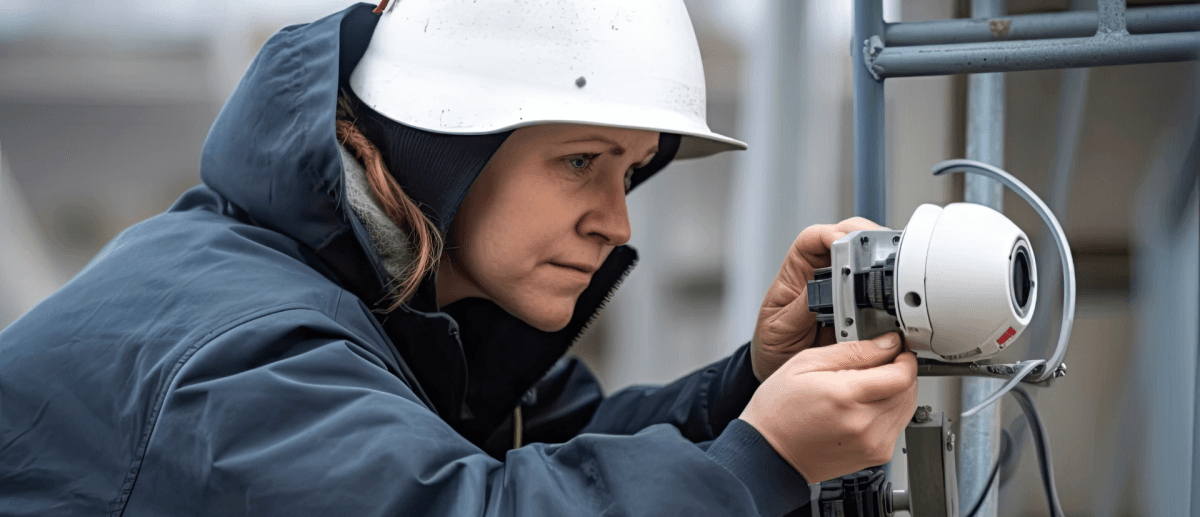
Businesses are deploying various camera types tailored to Long Island's diverse environments, including box-style cameras for specialized focal lengths, dome cameras for discreet monitoring in lobbies and parking structures, PTZ cameras for situational awareness in warehouses and campuses, and bullet-style cameras for perimeter security. Thermal cameras are being implemented in fog-prone areas and along fence lines where visible light struggles, detecting heat signatures before individuals become visible on standard video. This technological adaptation is important because it demonstrates how AI-powered systems can overcome environmental challenges specific to the region, providing consistent security coverage regardless of weather conditions or time of day.
The integration of these systems with other business technologies multiplies their value, connecting with access control systems to trigger recording on badge reads or denied entries, verifying intrusion detection alerts to reduce false alarms, and overlaying point-of-sale data with camera views for transaction investigations. This creates a unified operational view across multiple systems, reducing information silos and improving audit capabilities. The implication is significant: rather than operating as isolated security tools, these systems become integrated business intelligence platforms that support multiple functions beyond traditional security.
Companies are finding that these advanced systems provide significant operational benefits beyond security, including reduced incident counts, quicker response times, and stronger evidence for liability protection. The technology helps deter theft, resolve vendor disputes more effectively, and provide trusted documentation for slip-and-fall claims and property damage incidents. Many businesses review business surveillance solutions to evaluate implementation options that meet their specific needs. This broader application matters because it transforms security from a cost center to a value-generating function that supports multiple business objectives, from risk management to operational optimization.
The shift to AI-driven security represents a fundamental change in how Long Island businesses approach risk management, moving from reactive recording to proactive prevention while improving operational efficiency across multiple locations and business functions. This matters because it reflects a larger trend toward data-driven decision making in business operations, where technology not only addresses specific security concerns but also generates insights that can improve overall business performance. As these systems become more sophisticated and integrated, they're likely to become standard infrastructure for businesses seeking to maintain competitiveness while managing risk in an increasingly complex operational environment.