
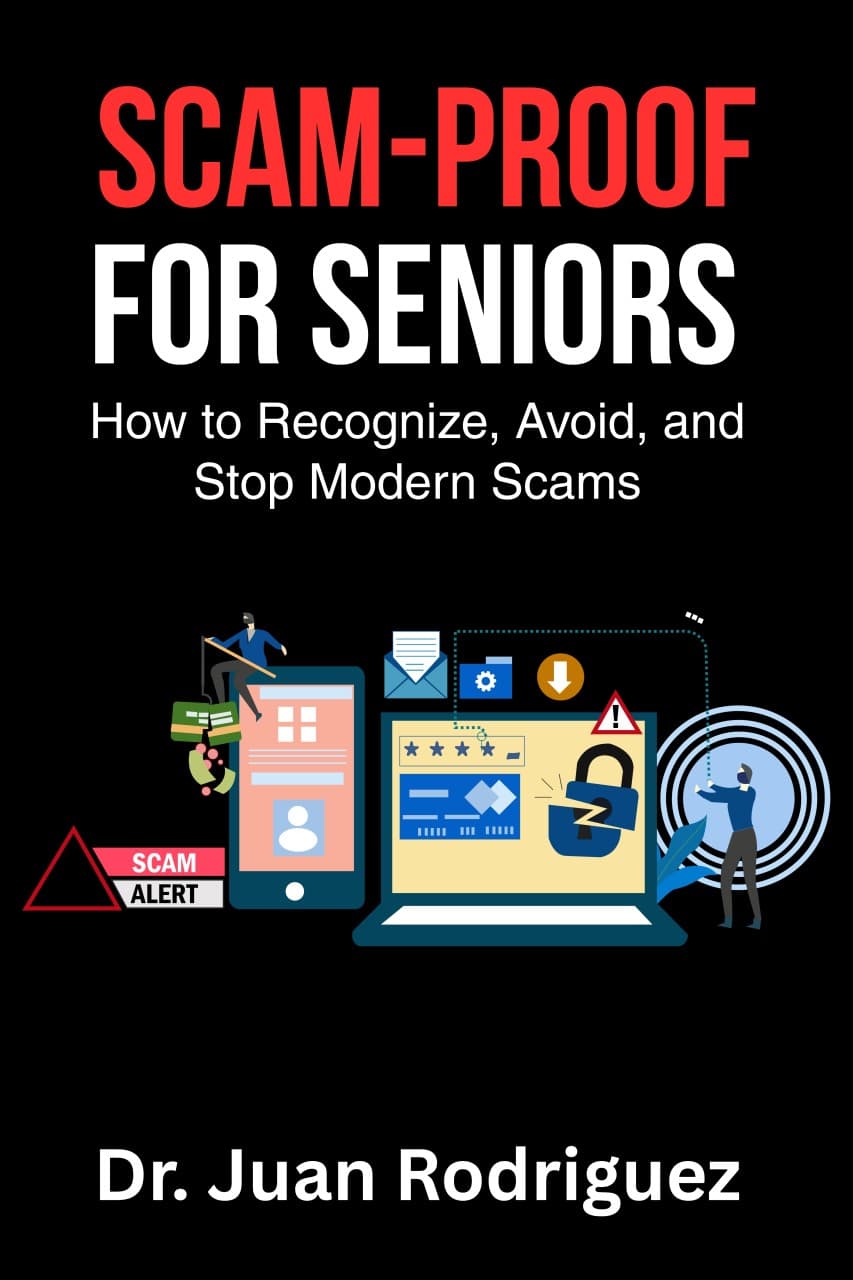
As digital scams proliferate through email, text messages, phone calls, and social media, cybersecurity professional Dr. Juan Rodriguez has released a new book, Scam Proof for Seniors, to address the urgent need for practical consumer education. The guide aims to help readers protect their personal data, finances, and digital identity from modern fraud schemes by explaining how scams operate and why they succeed.
Rodriguez, who hosts the Technology Tap podcast, draws on years of experience teaching cybersecurity to translate complex digital risks into clear, actionable strategies. The book covers a wide spectrum of threats, including phishing emails designed to steal login credentials, fake tech support calls that gain remote access to devices, romance scams that exploit emotional vulnerability, and impostor government messages that create false urgency.
Each scenario is presented with practical guidance for recognition and response, focusing on education and empowerment rather than technical jargon. Written with seniors and families in mind, the guide emphasizes real-world applications through concrete examples of scam scenarios that readers might encounter. This approach reflects Rodriguez's educational philosophy of making digital safety accessible to those who may feel overwhelmed by rapidly evolving technology.
The book's release comes as reports of digital fraud continue to increase across all age groups, with particular concern for older adults who may be targeted due to perceived vulnerability or accumulated savings. By providing clear frameworks for evaluating suspicious communications and verifying legitimate contacts, the book aims to reduce successful scam attempts through increased public awareness.
The practical strategies outlined address both prevention and response, giving readers tools to protect not only themselves but also family members who might be at risk. This educational approach represents a shift from purely technical solutions toward human-centered digital safety that acknowledges the psychological tactics scammers employ.
The publication arrives during a period of escalating digital threats that have financial, emotional, and identity-related consequences for victims. Rodriguez's background in both cybersecurity and education positions him to bridge the gap between technical expertise and practical application, offering a resource that addresses the human elements of digital safety alongside the technical aspects of protection.
