
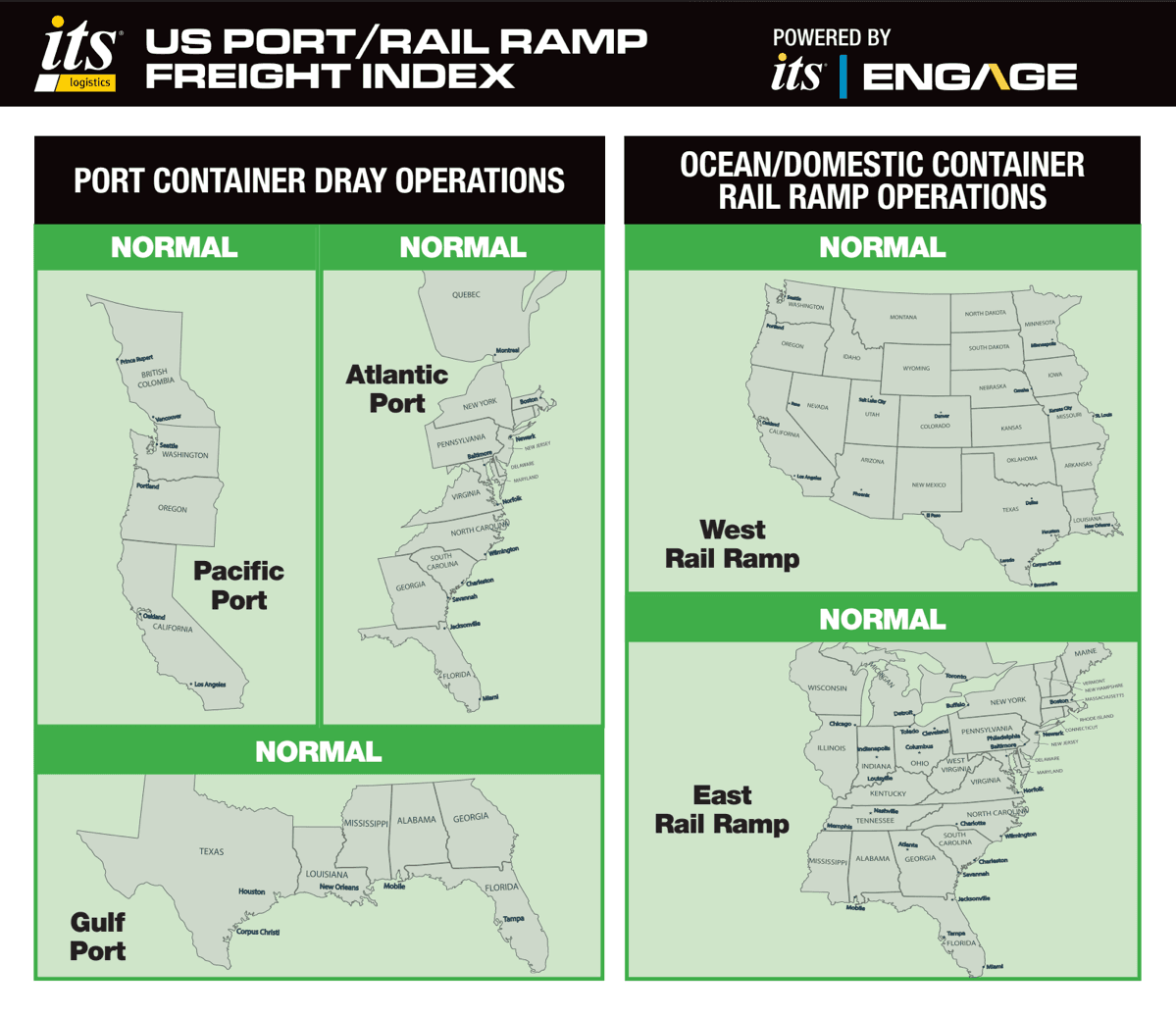
The ITS Logistics August Port Rail Ramp Index underscores mounting financial pressure on trucking companies across the industry, as major West Coast drayage providers cease operations. For the New York City metro area, which relies heavily on efficient supply chains for its diverse economy, these developments signal potential disruptions in goods movement and rising costs.
Paul Brashier, Vice President of Global Supply Chain for ITS Logistics, noted that industry professionals should anticipate export volume surges following U.S. trade agreements, as shippers work to meet pent-up demand. This aligns with a FreightWaves May 2025 report that the U.S.-China agreement to roll back tariffs and implement a 90-day negotiation pause would create economic disruption and expected transportation rate surges. For New York businesses, particularly small retailers and manufacturers, such rate increases could squeeze margins and lead to higher consumer prices.
New tariffs continue placing pressure on international trade. The National Retail Federation's Global Port Tracker report confirms import cargo volume at major container ports is forecasted to end 2025 at 5.6% below 2024's volume. Preliminary data show the significant impact of current trade policies on supply chains, increasing consumer prices while reducing goods availability. This is especially challenging for small businesses in the New York metro area, which often lack the resources to absorb cost increases or find alternative suppliers. July retail sales excluding automobiles and gasoline increased 1.45% seasonally adjusted month-over-month and 5.89% unadjusted year-over-year, as consumers increased spending in anticipation of future price hikes and potential shortages.
The Port of Los Angeles handled 892,340 Twenty-Foot Equivalent Units in June 2025, an 8% increase from last year and the busiest June in its history. Loaded imports reached 470,459 TEUs (10% more than 2024) while loaded exports landed at 126,144 TEUs (3% improvement from 2024). Brashier expects volumes to subside approaching September except for infrastructure and project freight, which should increase through 2025 into 2026 due to newly passed congressional legislation. For New York, which depends on West Coast ports for many imported goods, any volume fluctuations can affect inventory levels and delivery timelines.
Industry professionals must pay close attention to trucking partners' financial health following recent closures of major West Coast drayage providers T.G.S. Logistics and GSC Logistics, both of which closed after nearly four decades of service citing current market conditions. These closures particularly impact the Port of Oakland supply chain community, but their ripple effects extend to New York metro businesses that rely on seamless intermodal connections. The ITS Logistics US Port/Rail Ramp Freight Index forecasts port container and dray operations for Pacific, Atlantic, and Gulf regions, highlighting the importance of monitoring these trends for local supply chain resilience.
