
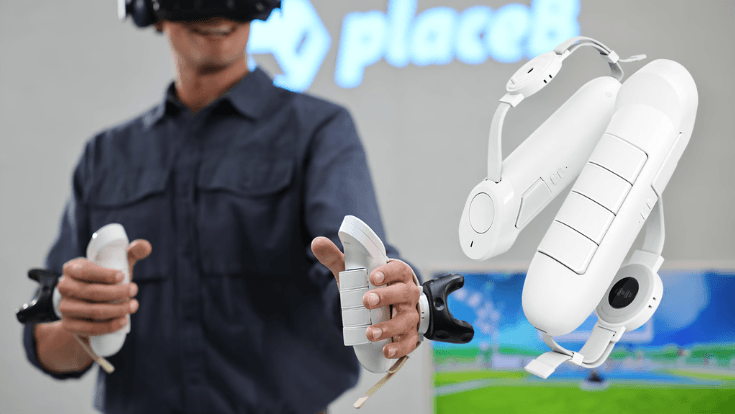
The virtual reality industry is set to receive a boost with the launch of Bstick, a cutting-edge VR haptic controller, on Kickstarter on August 6, 2024. This device promises to enhance immersion through state-of-the-art haptic feedback technology, allowing users to feel tangible sensations corresponding to their actions in virtual environments. The precise and responsive vibrations simulate touch, addressing a key gap in current VR controllers.
Ergonomics is central to Bstick's design, with a lightweight, handheld form factor that prioritizes comfort during extended VR sessions. This could increase the time users spend in VR applications, potentially benefiting sectors like gaming, education, and professional training. Additionally, Bstick includes biometric reading capabilities, with sensors that monitor heart rate and other vital signs. This feature offers insights into physiological responses, opening possibilities for health and wellness applications within VR.
Accessibility is a focus, with a user-friendly interface designed for both VR veterans and newcomers, reducing the learning curve and broadening VR's appeal. Compatibility is another strength, as Bstick works with major VR platforms including Vive, Valve Index, and other OpenXR systems, as well as all OpenVR supported HMD programs. This wide compatibility allows integration into existing setups without additional hardware upgrades.
For developers, Bstick's compatibility with popular game engines like Unity and Unreal Engine SDK simplifies integration, potentially leading to a new wave of immersive VR content across industries. The launch on Kickstarter marks a significant moment, as enhanced controllers could drive adoption and expand VR's potential beyond gaming.
Early backers can secure the controller at a discounted price, positioning themselves at the forefront of VR innovation. As the industry evolves, innovations like Bstick underscore the commitment to creating more immersive and realistic experiences. The success of this controller could pave the way for further advancements in haptic technology and biometric integration, reshaping how we interact with virtual environments.
